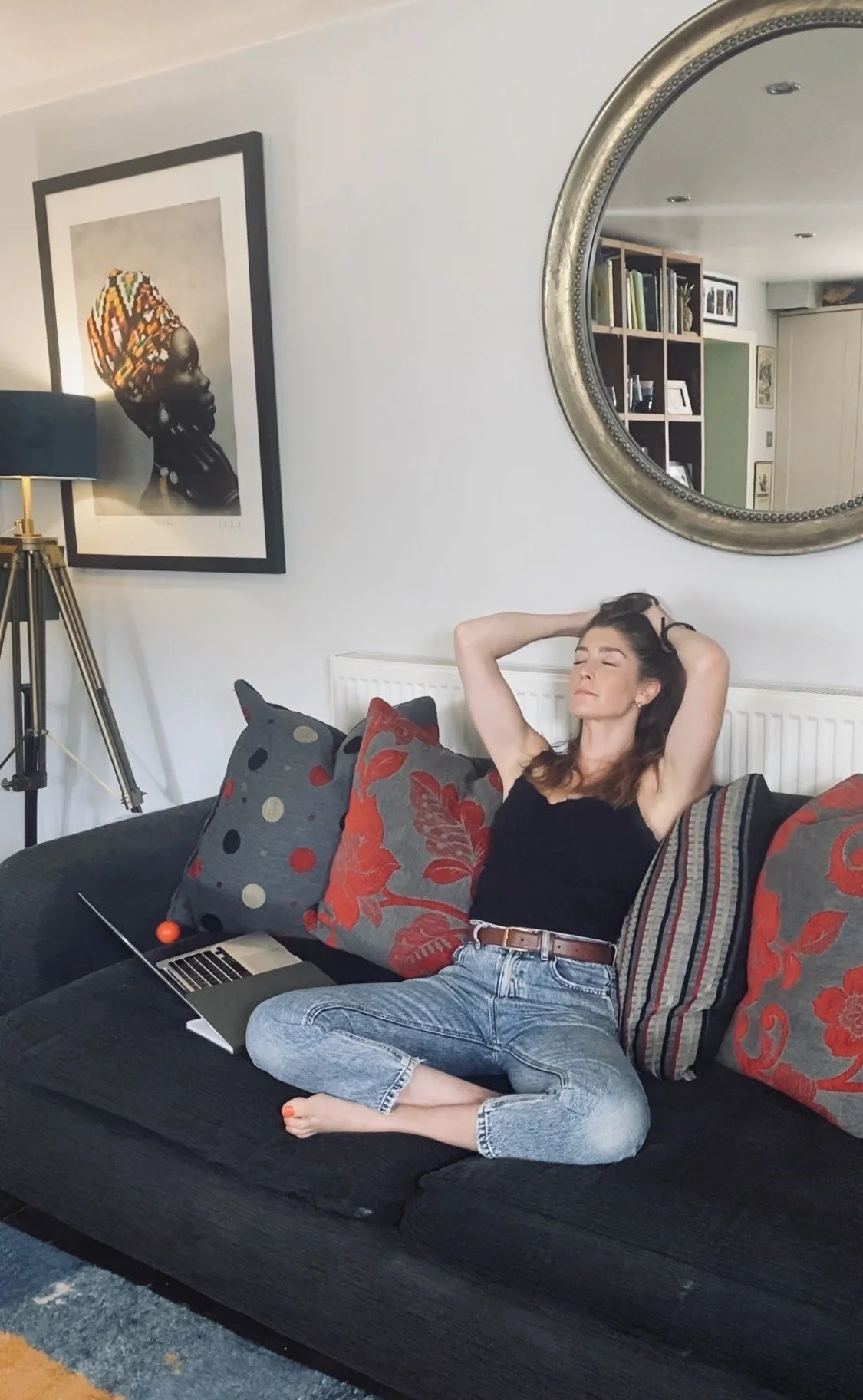
Picture this: you're halfway through dinner, half-listening to your kids, mentally running through tomorrow's to-do list, while simultaneously wondering why you feel so flat. You're not sad. You're not unwell. You're just... running on empty. Again.
If that sounds familiar, this is for you. Because I've lived this, as many women have, and I know exactly how easy it is to miss what's really going on underneath all that doing.
We want it all
We've been told we can have it all: the career, the family, the adventure, the social life. And we do want it all. I'm not here to argue with that. But I am here to say: it's a lot for a nervous system to carry.
Right now I'm raising two children, running two businesses, and managing a household. Most of the high-achieving women I know are holding something similar. And when I ask them how they are? They say frazzled but they love the chaos.
And I get it. Busy can feel alive. But there's a difference between a full life and a dysregulated one, and most of us are living in the second without realising it. I am not exempt from this.
"I thought running on adrenaline meant I was thriving. It took hitting a wall to realise it just meant I'd stopped feeling."
What's actually happening in your body
Your nervous system has two modes: sympathetic (fight or flight, activated, alert, mobilised) and parasympathetic (rest and digest, calm, regulated, safe). When we're chronically busy, over-stimulated, and under-rested, we get stuck in sympathetic dominance. Cortisol, the body's primary stress hormone, stays elevated. Over time, this creates what researchers call allostatic load: the cumulative wear on your body from sustained stress. It affects sleep, immunity, hormonal balance, mood, and eventually your ability to feel joy or connection.
Here's the part that makes it hard to spot: stress hormones can feel good. Cortisol and adrenaline sharpen your focus, keep you moving, make you feel capable. Your body literally begins to crave them. The buzz of a packed schedule starts to feel like purpose. And without it, you feel lost, flat, even anxious.
This isn't a character flaw. It's a stress addiction loop and it's extremely common in high-functioning women.
Signs you might be living in fight or flight
These aren't dramatic. They're the quiet, everyday ones most of us put down to just being busy:
- Wired but exhausted, can't switch off but desperately need to
- Reaching for wine, Netflix, or sugar just to decompress
- Feeling like you need a holiday, constantly
- Snapping at the people you love, then feeling guilty about it
- Struggling to be present even when nothing is demanding your attention
- Your body feels tight, braced, like you're waiting for something to go wrong
These are your nervous system's signals. And they're not to be ignored.
The world feeds this
The expectations placed on women, by society and by ourselves, are enormous. We've internalised the idea that doing more is being more. That rest is lazy. That slowing down means falling behind.
And so we keep feeding the loop. Because it feels like the only option. Because stopping feels terrifying. And because, if we're honest, we don't quite know who we are when we're not in motion.
But here's the real question
What do you actually want from your life, not just from this week?
- Do you want longevity, a body and mind that work for you long-term?
- Do you want real intimacy, presence in your relationships, not just proximity?
- Do you want to feel centered, not as a treat, but as a baseline?
- Do you want to feel good in your body, not just functional, but genuinely well?
If yes to any of those, then something has to shift. The stress loop has to be interrupted at multiple layers.
Where to start: three small shifts
These aren't a 10-step programme. They're entry points: small, doable, and genuinely effective.
1. Give your body a signal that it's safe. Even two minutes of slow, deliberate breathing activates the parasympathetic nervous system. Exhale longer than you inhale. Do it before you get out of the car, before you pick up your phone in the morning, before a difficult conversation. It sounds small but it's super effective, especially sprinkled throughout your day.
2. Notice the thought loops. A huge part of fight or flight isn't just what we're doing: it's the constant mental churn underneath it. Anxiety about tomorrow, replaying yesterday. Start to notice when your mind is catastrophising or planning obsessively. Try saying STOP to those thoughts. You don't have to fix the thought. Just see if you can stop it in its tracks.
3. Stop being the last one on the list. This isn't about bubble baths and self-care Sundays. It's about treating your wellbeing as non-negotiable: building in rest before you're depleted, nourishment before you're running on empty. Not as a reward for getting everything done. As a condition for doing it at all. So you can continue to hold, without burning out, whatever it is you're holding.
The framework underneath this
The work of shifting from chronically activated to genuinely settled happens across four layers: the body, the mind, your identity, and your focus. I call these Regulate, Reflect, Reconnect, and Respond. It's the same framework I use with every 1:1 client, moving from high-functioning and overwhelmed, to centred, clear, and responding to life intentionally rather than just reacting to it.
If this resonated, and you recognise the loop you're in, here are two places to start.
The Inner Stability Reset: £37 Download the Free Starter Guide